Pro Tools Training in Dubai: Why It’s Still the Industry Standard
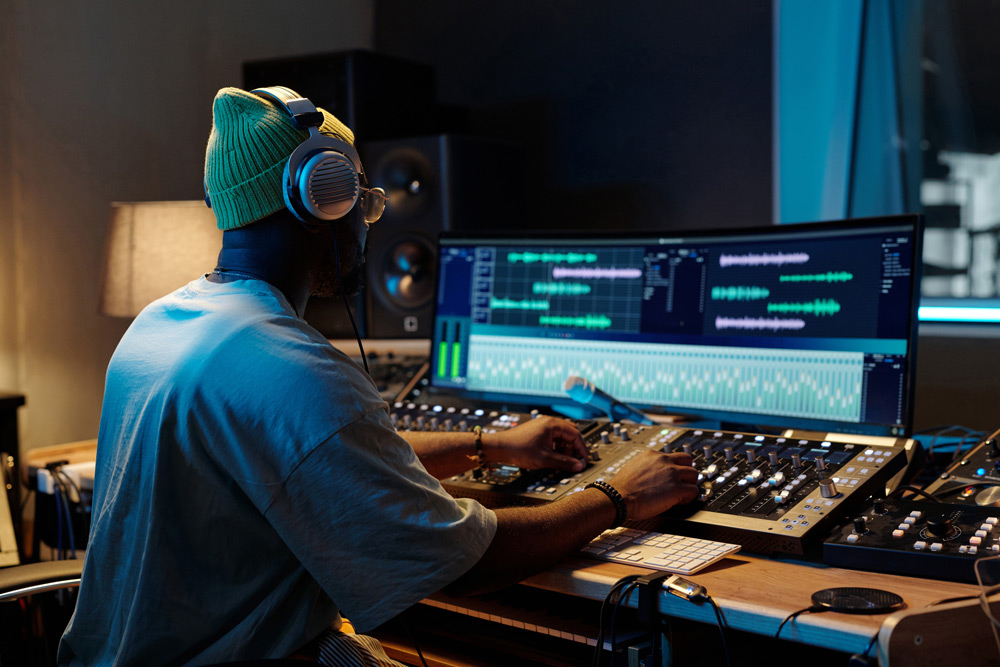
In an era defined by rapid technological change, few tools in music production have maintained their professional relevance as consistently as Pro Tools. From major recording studios to film post-production facilities, the software has long been regarded as the backbone of professional audio workflows. In Dubai—where the media, entertainment, and creative industries continue to expand at remarkable speed—Pro Tools training remains one of the most valuable technical skills aspiring producers, engineers, and composers can acquire.
The city’s recording studios, broadcast environments, and film production houses rely on standardized systems that ensure seamless collaboration and predictable results. Pro Tools continues to meet that demand with unmatched reliability, powerful editing capabilities, and industry-wide compatibility.
Several realities explain why Pro Tools training continues to attract musicians and audio professionals in Dubai:
- It remains the dominant platform in professional recording and post-production studios worldwide.
- Certification programs align closely with real studio workflows used in commercial environments.
- Knowledge of Pro Tools allows producers and engineers to move fluidly between music, film, and broadcast industries.
- The software integrates smoothly with modern hardware systems and high-end studio infrastructure.
For anyone pursuing a serious career in audio production, understanding Pro Tools is less about learning software and more about gaining fluency in the language of the professional studio.
The Evolution of Pro Tools in Modern Music Production and Education
When digital recording first began replacing analog tape machines in professional studios, the transition was neither immediate nor universally welcomed. Engineers who had spent decades mastering the intricacies of analog workflows approached digital systems with understandable skepticism. Early digital audio workstations often lacked the stability, precision, and sonic reliability required for professional sessions.
Pro Tools emerged during this transitional period and gradually established itself as a dependable solution for recording, editing, and mixing digital audio. What began as a relatively modest editing system evolved into a comprehensive production environment capable of handling large-scale music sessions, film scoring projects, and complex post-production work.
One of the defining characteristics of Pro Tools has been its commitment to replicating the logic and workflow of traditional studio environments. While other software platforms focused on creative experimentation or loop-based composition, Pro Tools focused on precision, editing accuracy, and professional session management. This design philosophy helped the platform gain the trust of engineers who were transitioning from tape machines and large-format mixing consoles.
As digital audio technology matured, Pro Tools expanded its capabilities dramatically. Advanced editing tools allowed engineers to manipulate audio with microscopic precision. Elastic audio features made time correction and tempo adjustments more intuitive. Integrated MIDI tools opened the door to music production workflows that combined recorded instruments with digital composition.
These developments coincided with major changes in the way music was produced and distributed. As home studios became more accessible, new producers entered the industry without traditional studio training. Many of them initially gravitated toward software designed for quick music creation. Yet when projects reached the professional mixing or mastering stage, sessions often returned to Pro Tools because of its reliability and compatibility with commercial studios.
Music education institutions gradually adapted to this reality. Schools that once centered their curricula around analog recording techniques began integrating digital audio workstations into their training programs. Among these systems, Pro Tools became the most widely adopted platform for teaching professional recording and editing practices.
In Dubai, where the music and media industries have expanded alongside the city’s cultural growth, educational institutions followed the same trajectory. Recording academies and audio engineering schools began offering structured training programs focused specifically on Pro Tools workflows. Students learned not only how to operate the software but also how to think like professional engineers—organizing sessions, managing tracks, and preparing projects for collaborative production environments.
The evolution of Pro Tools also reflects a broader shift in music education itself. Traditional music programs historically emphasized theory, performance, and composition, often with little emphasis on studio production. Modern programs now integrate production technology as a core discipline, recognizing that contemporary musicians frequently operate as producers, engineers, and content creators simultaneously.
This shift has made Pro Tools training increasingly valuable for a wide range of professionals. Recording engineers rely on its editing precision, composers use it to manage large orchestral sessions, sound designers employ it for complex audio layering, and post-production specialists depend on its synchronization tools for film and television projects.
In many ways, Pro Tools has become more than software. It functions as a shared technical language across the global audio industry. Engineers from different countries and studios can exchange sessions with confidence, knowing that the structure of the project will remain intact. This interoperability is essential for large-scale productions where music, dialogue, and sound design may be handled by different teams in different locations.
Dubai’s role as an international creative hub makes this compatibility particularly important. Projects produced in the city often involve collaborations with artists, filmmakers, and engineers from Europe, North America, and Asia. When everyone works within the same professional framework, creative collaboration becomes far more efficient.
The continued presence of Pro Tools in both educational institutions and commercial studios reflects the platform’s adaptability. Despite the emergence of many competing digital audio workstations, Pro Tools continues to evolve while maintaining the workflow principles that made it successful in the first place.
Students who learn Pro Tools today are not simply studying software. They are entering a professional ecosystem that connects music production, film scoring, broadcast media, and immersive audio design. Understanding that ecosystem provides a foundation that extends far beyond technical proficiency.
In Dubai’s rapidly expanding creative sector, this kind of industry-aligned training offers aspiring audio professionals something invaluable: the ability to move confidently from the classroom into the professional studio environment.
Why Recording Studios and Music Schools in Dubai Still Rely on Pro Tools
Walk into a professional recording studio almost anywhere in the world and the chances are high that Pro Tools will be at the center of the control room. The same is true in Dubai, where commercial studios, broadcast facilities, and film production companies rely on standardized systems that ensure every session runs smoothly. Despite the growing number of digital audio workstations available to producers, Pro Tools remains the platform most trusted by professional engineers and studio managers.
One of the key reasons lies in consistency. Professional studios handle projects involving multiple artists, producers, and technical teams. Sessions move between recording rooms, editing suites, and mixing stages, sometimes across different countries. Pro Tools provides a workflow that allows these transitions to happen without technical friction. A project recorded in one studio can be opened in another with minimal adjustments, preserving track structure, automation, routing, and plugin configurations.
Dubai’s creative sector operates within this global network. The city hosts international artists, film productions, advertising agencies, and broadcast networks, all of which require reliable production infrastructure. When visiting producers arrive with sessions created elsewhere, studios must be able to open and continue those projects instantly. Pro Tools has become the common denominator that allows this to happen.
Music schools in Dubai reflect the same professional reality. Training programs are designed not only to teach students how to create music but also to prepare them for real working environments. Teaching Pro Tools ensures that graduates enter studios with familiarity in the tools they will actually encounter during professional sessions.
Another reason for Pro Tools’ continued dominance is its editing precision. Recording engineers often deal with performances that require detailed adjustments, from tightening drum timing to correcting vocal phrasing. Pro Tools offers advanced editing tools that allow engineers to manipulate audio with exceptional accuracy while preserving the natural character of the performance. For projects that demand high production standards—commercial releases, film soundtracks, broadcast recordings—this level of control is essential.
The software’s deep integration with professional audio hardware also contributes to its popularity in studio environments. Many commercial studios operate complex recording systems involving high-end interfaces, control surfaces, and large-format monitoring setups. Pro Tools is designed to function seamlessly within these environments, providing stable performance even during sessions with hundreds of audio tracks.
Dubai’s growing film and media industry adds another layer to the story. Post-production facilities responsible for editing dialogue, sound effects, and music for film and television rely heavily on Pro Tools because of its powerful synchronization and audio management capabilities. Engineers working in these environments often handle sessions containing thousands of clips, complex automation, and multiple surround sound formats. The platform’s ability to organize and manage such large projects makes it indispensable.
Educational institutions recognize that mastering Pro Tools gives students access to a wide spectrum of creative industries. A graduate trained in the software can work not only in music production but also in film post-production, game audio design, broadcast sound engineering, and live recording. This versatility makes Pro Tools training particularly valuable in a city where the entertainment, tourism, and media sectors intersect.
There is also a cultural dimension within professional audio circles. Over decades, Pro Tools has become embedded in studio culture. Engineers share editing techniques, session templates, and workflow strategies built specifically around the platform. When a new engineer joins a studio team, the expectation is often that they already understand this shared language.
Dubai’s music scene has matured significantly over the past two decades, evolving from a regional market into an international creative hub. Recording studios now host projects ranging from Arabic pop productions to global electronic music collaborations. With artists and engineers arriving from different backgrounds, a standardized production platform becomes even more important.
Pro Tools provides that common ground. It allows professionals trained in different parts of the world to collaborate without spending hours adapting to unfamiliar systems. For studios operating on tight production schedules, that efficiency is invaluable.
Music schools understand this dynamic clearly. By structuring their curricula around Pro Tools training, they ensure that students are not learning in isolation from the industry they hope to join. Instead, they are stepping into a professional workflow that has been refined over decades of real studio experience.
Core Skills You Gain from Professional Pro Tools Training Programs
Professional Pro Tools training is often misunderstood as simple software instruction. In reality, well-designed programs focus on far more than teaching which buttons to press. They introduce students to the underlying principles of modern audio engineering, developing technical instincts that extend far beyond the software itself.
One of the first skills students develop is session organization. Professional recording projects can involve dozens or even hundreds of audio tracks, multiple takes, and complex routing structures. Without careful organization, sessions quickly become chaotic. Training programs emphasize naming conventions, track grouping, color coding, and folder structures that allow engineers to navigate large sessions efficiently.
This organizational discipline becomes especially important during collaborative projects. Producers, editors, and mixing engineers often share sessions across different studios. A well-structured Pro Tools session ensures that every participant understands the layout immediately, reducing confusion and preventing costly mistakes.
Editing techniques form another central component of professional training. Students learn how to manipulate audio clips with precision, aligning performances rhythmically and correcting timing inconsistencies without sacrificing musical feel. Techniques such as comping—combining multiple takes into a single polished performance—are explored in depth.
These editing processes require a sensitive balance between technical precision and artistic judgment. A skilled engineer understands when to correct a performance and when to preserve its natural imperfections. Training programs expose students to real recording scenarios where these decisions must be made carefully.
Signal flow is another critical concept taught through Pro Tools training. Understanding how audio travels from microphones to preamps, through the recording interface, and into the digital session is fundamental to professional engineering. Students explore how routing works inside the software, learning to manage buses, auxiliary tracks, and subgroup processing.
This knowledge allows engineers to build sophisticated mixing environments within a Pro Tools session. Effects such as reverbs and delays can be shared across multiple tracks through send and return systems, mimicking the routing architecture of large analog mixing consoles. By mastering these techniques, students gain insight into both digital and traditional studio workflows.
Mixing skills represent another major area of focus. Training programs guide students through the process of balancing levels, shaping tonal character with equalization, controlling dynamics with compression, and placing instruments within the stereo field. While artistic taste ultimately shapes mixing decisions, the technical tools used to achieve those results must be understood deeply.
Automation becomes an essential skill in this context. Pro Tools allows engineers to adjust levels, panning, and effects parameters dynamically throughout a song. Instead of setting a static mix, engineers can shape the energy of a track over time, emphasizing certain elements during choruses or creating subtle transitions between sections.
Professional training also introduces students to advanced production techniques such as vocal tuning, drum editing, and time alignment across multiple microphones. These processes are common in modern music production and require both technical knowledge and careful listening.
Another significant aspect of Pro Tools education involves session preparation for mixing and mastering engineers. Students learn how to clean up projects, remove unused clips, label tracks clearly, and consolidate files so that external engineers can work efficiently. These preparation skills are highly valued in professional environments where time is often limited.
The ability to troubleshoot technical problems is equally important. Studio sessions rarely proceed without unexpected challenges. Audio interfaces may disconnect, plugins may behave unpredictably, or sessions may become corrupted due to improper file management. Training programs expose students to these scenarios and teach strategies for resolving them quickly.
For students in Dubai, these skills are particularly relevant because many local studios operate within fast-paced production schedules. Commercial recording sessions often involve clients who expect immediate results, leaving little room for technical confusion.
By the time students complete a comprehensive Pro Tools training program, they have typically moved beyond thinking of the software as a digital tool. Instead, they see it as a professional environment where creative ideas are translated into finished recordings. The software becomes a bridge between musical imagination and technical execution.
From Classroom to Commercial Studio: Real-World Workflows in Pro Tools**
The transition from a training environment to a professional studio can be a revealing experience for new engineers. In the classroom, sessions are often structured and predictable. In a commercial studio, however, the pace of work changes dramatically. Artists arrive with creative ideas that evolve quickly, producers make spontaneous decisions, and engineers must respond in real time without disrupting the flow of the session.
Pro Tools plays a central role in managing this environment. Because the platform has become the standard across professional studios, engineers trained in Pro Tools can step into unfamiliar rooms and immediately understand the workflow. Track layouts, editing tools, and mixing structures follow conventions that remain consistent across facilities.
During recording sessions, engineers must manage multiple technical processes simultaneously. Microphones capture performances in real time, headphone mixes must be balanced for performers, and tracks must be labeled and organized as they are recorded. Pro Tools provides the framework for managing these tasks efficiently, allowing engineers to focus on the creative atmosphere of the session rather than struggling with technical distractions.
Editing sessions often follow recording days. Engineers review multiple takes of each performance, selecting the strongest moments and assembling them into a cohesive final track. This comping process requires careful listening and precise editing to ensure that transitions between takes are seamless. Pro Tools’ editing tools allow engineers to make these adjustments quickly without interrupting the artistic integrity of the performance.
Mixing represents another stage where professional workflows become more complex. Engineers must balance dozens of tracks while shaping the emotional impact of the music. Subtle adjustments in volume, equalization, and spatial placement can dramatically influence how listeners experience a song.
In commercial studios, these mixing decisions often occur under time pressure. Artists and producers may request revisions quickly, expecting engineers to implement changes within minutes. Pro Tools’ automation and session management features allow engineers to experiment with different approaches while maintaining control over the entire project.
Another aspect of real-world workflows involves collaboration. Modern music production frequently involves multiple specialists working on the same project. A producer may handle the initial recording, an editor may refine performances, and a mixing engineer may shape the final sound. Each stage of the process requires sessions to be passed between professionals without losing structural integrity.
Pro Tools has become the backbone of this collaborative environment. Sessions can be transferred between studios with confidence that tracks, routing, and plugin settings will remain intact. For international projects—common in Dubai’s global music scene—this compatibility is essential.
Students who train extensively in Pro Tools often find that their classroom experience translates directly into professional studio work. The terminology, editing techniques, and workflow structures they learned during training mirror the procedures used by experienced engineers. Instead of struggling to adapt to unfamiliar systems, they can focus on refining their listening skills and creative instincts.
This seamless transition from education to industry is one of the reasons Pro Tools training remains so highly valued. It prepares students not only to operate software but to participate in the collaborative culture of professional recording.
Integrating Pro Tools with Modern Music Production, Film Scoring, and Post-Production**
The scope of Pro Tools extends far beyond traditional music recording. Over time, the platform has evolved into a comprehensive audio production environment capable of supporting a wide range of creative disciplines. From electronic music production to film scoring and broadcast post-production, Pro Tools has become an essential tool across multiple branches of the audio industry.
Modern music production often combines live instrumentation with digital composition techniques. Producers build complex arrangements that blend recorded performances, synthesizers, and virtual instruments. Pro Tools accommodates these hybrid workflows by offering advanced MIDI sequencing alongside its renowned audio editing capabilities.
Film scoring represents another area where Pro Tools plays a critical role. Composers working on cinematic projects must synchronize music precisely with visual scenes, adjusting tempo, dynamics, and orchestration to match the emotional rhythm of the film. Pro Tools allows composers to align musical cues with picture timelines, ensuring that dramatic moments occur exactly where they are intended.
In large scoring sessions, composers may work with orchestral recordings containing dozens of instrument groups. Each section—strings, brass, percussion, woodwinds—may be recorded across multiple microphones to capture spatial depth. Pro Tools provides the infrastructure required to manage these large track counts while maintaining precise synchronization with video playback.
Post-production environments depend on Pro Tools even more heavily. Dialogue editing, sound design, and final mixing for film and television require complex audio sessions involving thousands of individual clips. Engineers must align dialogue with lip movements, create immersive soundscapes, and integrate music with environmental effects.
Dubai’s rapidly expanding media sector has increased demand for professionals capable of handling these tasks. Film production companies, advertising agencies, and broadcast networks all require skilled audio engineers who understand post-production workflows. Pro Tools training provides the technical foundation necessary for these roles.
The rise of immersive audio formats has further expanded the software’s capabilities. Surround sound systems used in cinemas and advanced streaming platforms require engineers to position sounds within three-dimensional environments. Pro Tools supports these formats through sophisticated routing and monitoring systems that allow engineers to create spatially rich audio experiences.
Game audio design represents another emerging field where Pro Tools skills are valuable. Video games increasingly feature cinematic soundtracks and detailed environmental audio. Sound designers create layers of ambience, effects, and musical elements that respond dynamically to player actions. Pro Tools often serves as the editing and mixing platform for these complex audio assets.
For students in Dubai, exposure to these diverse applications opens doors beyond traditional music production careers. A single training program in Pro Tools can lead to opportunities in film studios, media production houses, advertising agencies, and digital entertainment companies.
The ability to integrate music production with broader media workflows is becoming increasingly important in today’s creative economy. Musicians and producers rarely work in isolation anymore. Their work intersects with visual storytelling, interactive media, and immersive experiences.
Pro Tools sits at the center of this intersection, functioning as a universal platform for professional audio production across industries.
Career Pathways After Pro Tools Certification in Dubai’s Audio Industry**
Completing a professional Pro Tools certification program can open several different career pathways within Dubai’s expanding audio and media landscape. The city’s role as a regional hub for entertainment, tourism, and digital media has created a demand for skilled audio professionals capable of working across multiple production environments.
One of the most direct career paths is studio engineering. Recording studios across Dubai handle a wide variety of projects, including commercial music releases, voice-over recordings, podcast production, and advertising campaigns. Engineers responsible for these sessions must be proficient in recording techniques, editing workflows, and mixing processes within Pro Tools.
Another pathway leads into music production itself. Producers often manage entire recording projects from initial arrangement to final mix. Their responsibilities include guiding performers, shaping musical direction, and ensuring that technical processes support the creative vision of the project. Pro Tools serves as the central platform where these decisions are implemented.
Film and television post-production offers another avenue for trained professionals. Dialogue editors, sound designers, and re-recording mixers rely on Pro Tools to manage complex audio sessions synchronized with visual media. As Dubai continues investing in film production infrastructure, opportunities in this sector continue to grow.
Broadcast audio engineering represents yet another field where Pro Tools skills are valuable. Television networks, radio stations, and digital media platforms require engineers who can prepare audio content for live broadcasts and recorded programs. Editing dialogue, balancing music tracks, and managing sound effects all occur within professional digital audio workstations.
Some graduates choose to pursue careers as independent audio specialists. With portable recording equipment and Pro Tools-based editing systems, freelancers can provide services ranging from podcast production to music mixing for international clients. Dubai’s global connectivity makes it possible for audio professionals to collaborate with artists and producers across the world.
Education and training also represent long-term career possibilities. As demand for music production knowledge grows, experienced engineers often transition into teaching roles within music academies and training centers. Their real-world experience becomes invaluable for guiding the next generation of producers and engineers.
The versatility of Pro Tools training lies in its adaptability across these career paths. While specific roles may require additional specialization, the foundational skills developed during certification programs remain relevant throughout the audio industry.
In Dubai’s creative economy, where music, film, and digital media intersect, professionals who understand industry-standard tools often find themselves in a strong position to navigate multiple career opportunities.
Choosing the Right Pro Tools Training Program in Dubai for Long-Term Industry Success**
Selecting the right Pro Tools training program can shape the trajectory of an aspiring audio professional’s career. While many institutions offer courses in digital music production, not all programs provide the depth and industry alignment necessary to prepare students for professional studio environments.
The most effective programs combine technical instruction with practical studio experience. Students should have opportunities to record real musicians, edit complex sessions, and mix full productions rather than simply completing isolated exercises. Working with authentic material helps develop the decision-making instincts required in professional recording environments.
Access to professional-grade studio equipment is another important consideration. Training in rooms equipped with high-quality microphones, monitoring systems, and audio interfaces allows students to understand how Pro Tools interacts with real hardware infrastructure. This experience becomes invaluable when transitioning into commercial studios.
Instructors play an equally critical role. Programs led by engineers who actively work in the industry tend to provide insights that extend beyond software tutorials. Experienced instructors share practical strategies for managing sessions, communicating with artists, and navigating the business realities of the audio industry.
Networking opportunities also matter in a city like Dubai, where much of the creative industry operates through professional connections. Training centers that collaborate with local studios, media companies, and production houses can help students gain exposure to potential employers and collaborators.
Long-term success in audio production depends not only on mastering technical tools but also on developing professional discipline. Engineers must learn to listen critically, communicate effectively with creative teams, and adapt quickly to changing project demands.
Pro Tools training provides the technical backbone for these abilities, but the environment in which the training occurs determines how effectively those skills translate into real-world opportunities. When students choose programs that emphasize both technical mastery and professional workflow, they position themselves to enter Dubai’s evolving audio industry with confidence and credibility.
In a city where creativity and technology intersect across music, film, and digital media, mastering Pro Tools remains one of the most reliable ways to step into the professional world of sound.
Frequently Asked Questions
Pro Tools has a reputation for being technically sophisticated, but well-structured training programs introduce the software gradually. Beginners typically start with basic recording and editing functions before progressing to advanced mixing and automation techniques. With consistent practice, most students become comfortable navigating the platform within a relatively short time.
Pro Tools offers exceptional editing precision, stable performance in large sessions, and compatibility across professional studios worldwide. Because it has been the industry standard for decades, many studios rely on it to ensure seamless collaboration between engineers and production teams.
Musical knowledge can certainly be helpful, but it is not strictly necessary. Many audio engineers focus primarily on recording, editing, and mixing rather than composition. Training programs typically teach the technical aspects of sound production while encouraging students to develop their listening skills.
Yes. Pro Tools is widely used in film and television post-production, game audio design, broadcast media, and podcast production. Its powerful editing and synchronization tools make it suitable for many forms of professional audio work.
The timeline varies depending on the intensity of training and the amount of practice involved. Many certification programs last several months, but true proficiency often develops through hands-on experience working on real recording and mixing projects.