Guide to Music Production in Dubai: Tools, Studios, and Tips
Dubai’s Fast-Growing Music Production Scene and Creative Opportunities
Over the past decade, Dubai has evolved into one of the most intriguing music production hubs in the Middle East. What was once a city primarily associated with nightlife DJs and international touring acts has quietly transformed into a creative ecosystem where producers, engineers, artists, and visual creators collaborate across genres and cultures. The shift has been driven by a combination of infrastructure, technology, and a uniquely international population that constantly introduces new sonic influences into the local scene.
Unlike many traditional music capitals, Dubai’s production culture doesn’t revolve around a single genre. On any given day, studios across the city may be hosting sessions ranging from Afro house and Arabic pop to underground electronic music, hip-hop, film scoring, or experimental bass music. Producers here often find themselves working with artists from Europe, Asia, Africa, and the Americas, which naturally leads to hybrid sounds that rarely emerge in more homogeneous markets.
This diversity has created fertile ground for producers who are comfortable navigating multiple musical worlds. In Dubai, it’s common for someone to produce a commercial Arabic track one day and an underground club record the next. The ability to move fluidly between styles has become a defining characteristic of the city’s music professionals.
Technology has played a significant role in accelerating this growth. High-speed internet infrastructure, easy access to global digital distribution platforms, and a strong entrepreneurial mindset have made it possible for producers to operate internationally while physically based in the UAE. A track created in a bedroom studio in Dubai Marina or Al Quoz can be uploaded to streaming platforms and heard worldwide within hours.
Events and nightlife have also contributed to the city’s creative momentum. International DJs and artists regularly pass through Dubai, and many of them stay longer than expected, collaborating with local producers or hosting studio sessions while in town. These spontaneous collaborations often become the seeds of long-term creative partnerships.
For emerging producers, this environment presents an unusual advantage. Dubai is not oversaturated with producers in the same way cities like London, Berlin, or Los Angeles can be. That means the barrier to building meaningful connections is often lower, provided you approach the scene with professionalism and a willingness to collaborate.
The city rewards initiative. Producers who attend events, connect with DJs, work with vocalists, and actively share their work often discover that Dubai’s music community is surprisingly interconnected. Word travels quickly, and reputation—both creative and professional—can spread faster than expected.
Essential Music Production Tools and Software Used by Producers in Dubai
While Dubai’s music culture is shaped by its multicultural environment, the production tools used by local producers largely reflect global industry standards. Walk into most studios across the city and you’ll encounter a familiar technological backbone built around digital audio workstations, virtual instruments, and carefully selected hardware.
Among producers working in electronic music, Ableton Live has become one of the most widely used DAWs. Its flexible workflow, real-time performance capabilities, and seamless integration with MIDI controllers make it particularly popular among artists who perform live or build tracks around loop-based structures. Many Dubai-based producers rely heavily on Ableton’s racks and custom signal chains to design their own unique sound processing environments.
Logic Pro remains another major player, especially among producers involved in songwriting, pop production, and film scoring. Its extensive built-in instruments, orchestral libraries, and streamlined recording environment make it particularly appealing for artists who work with vocalists or live musicians.
FL Studio has also maintained a strong presence, particularly among younger producers entering th## e scene through hip-hop, trap, and drill production. Its intuitive step sequencer and pattern-based workflow make it an ideal entry point for beatmakers transitioning from casual experimentation to professional production.
Beyond the DAW itself, the modern producer’s toolkit includes a wide range of software instruments and audio plugins that shape the sonic identity of a track. Synthesizers such as Serum, Massive, Diva, and Omnisphere are widely used for sound design, offering producers the ability to sculpt textures ranging from warm analog-style pads to aggressive basslines and futuristic leads.
Equally important are mixing and mastering tools. Plugin suites from companies like FabFilter, Waves, and Soundtoys are staples in many Dubai studios, providing precise control over dynamics, equalization, and spatial effects. These tools allow producers to refine their sound to a level that competes with international releases.
Hardware still plays a meaningful role despite the dominance of software production. MIDI controllers, analog synthesizers, and drum machines frequently appear in professional studios, adding tactile control and sonic character that many producers find inspiring. Even a simple controller keyboard can dramatically improve workflow, allowing ideas to move from imagination to audio more fluidly.
In Dubai’s fast-paced creative environment, efficiency often becomes just as important as creativity. Producers who build well-organized production templates and custom effect racks can dramatically speed up their workflow, allowing them to focus more energy on artistic decisions rather than technical setup.
Top Recording Studios and Creative Spaces Across Dubai
Dubai offers an impressive range of recording studios, from boutique production rooms designed for electronic music creators to large-scale facilities capable of hosting orchestras or full band recordings. This diversity allows artists to choose environments that match both their budget and their creative needs.
One of the most distinctive aspects of Dubai’s studio landscape is how geographically distributed it is. Creative spaces can be found in areas such as Al Quoz, Dubai Media City, Jumeirah, and Dubai Knowledge Park. Each district has developed its own creative micro-community, often centered around studios, design agencies, and production companies.
Al Quoz, in particular, has emerged as one of the city’s most vibrant creative districts. Originally an industrial zone, it now houses galleries, design studios, and music production spaces that attract artists from across the region. The area’s raw warehouse architecture has proven surprisingly well suited for building large studio rooms with high ceilings and excellent acoustic potential.
Dubai Media City hosts a number of professional facilities that cater to broadcast production, advertising music, and corporate media work. These studios often combine recording rooms with post-production suites for audio editing, voiceover recording, and film sound design.
Meanwhile, smaller boutique studios scattered throughout residential areas provide more intimate environments for songwriting sessions and electronic music production. These spaces often feel less like commercial facilities and more like creative living rooms where producers and artists can experiment without pressure.
Another growing trend in Dubai is the rise of hybrid creative spaces. These venues combine recording studios with rehearsal rooms, photography sets, podcast studios, and content creation areas. For modern artists who must constantly produce visual content alongside music releases, this integrated approach offers significant advantages.
The availability of high-end equipment has improved significantly in recent years. Many studios now feature industry-standard microphones, analog preamps, professional monitoring systems, and acoustically treated control rooms designed to meet international production standards.
Yet perhaps the most valuable element of Dubai’s studios is the network effect they create. Sessions often bring together producers, vocalists, engineers, and managers who may never have met otherwise. In a city where creative communities are still forming, studios frequently function as the social infrastructure that connects the industry.
Building a Home Music Production Setup in Dubai
For many producers, the journey begins not in a professional studio but in a small home setup. In Dubai, building a personal production space has become increasingly accessible thanks to the availability of music equipment retailers, online stores, and international shipping options.
A basic home studio typically begins with three core components: a computer capable of handling audio production software, a reliable audio interface, and a pair of studio monitor speakers. These elements form the technical foundation that allows producers to record, edit, and mix music with clarity.
Room acoustics often become the next major consideration. Dubai’s apartments and villas vary widely in architectural design, which can dramatically affect how sound behaves inside a room. Producers frequently invest in acoustic treatment panels, bass traps, and diffusers to reduce unwanted reflections and improve monitoring accuracy.
The choice of headphones also becomes important, particularly for producers working late at night in residential buildings where loud monitoring may not be practical. High-quality reference headphones allow for detailed mixing decisions without disturbing neighbors.
MIDI controllers, drum pads, and small synthesizers gradually expand the creative capabilities of a home studio. Many producers find that even a minimal setup can produce professional results when combined with strong musical ideas and disciplined mixing techniques.
Dubai’s climate can introduce unexpected challenges as well. High temperatures and humidity during summer months make proper ventilation and equipment care essential, especially for producers working with sensitive hardware devices.
Despite these considerations, home studios remain the backbone of Dubai’s production culture. Many successful tracks released by artists in the region have been created entirely within compact bedroom setups, proving that creativity and technical knowledge often matter more than expensive gear.
Learning Music Production in Dubai: Courses, Workshops, and Communities
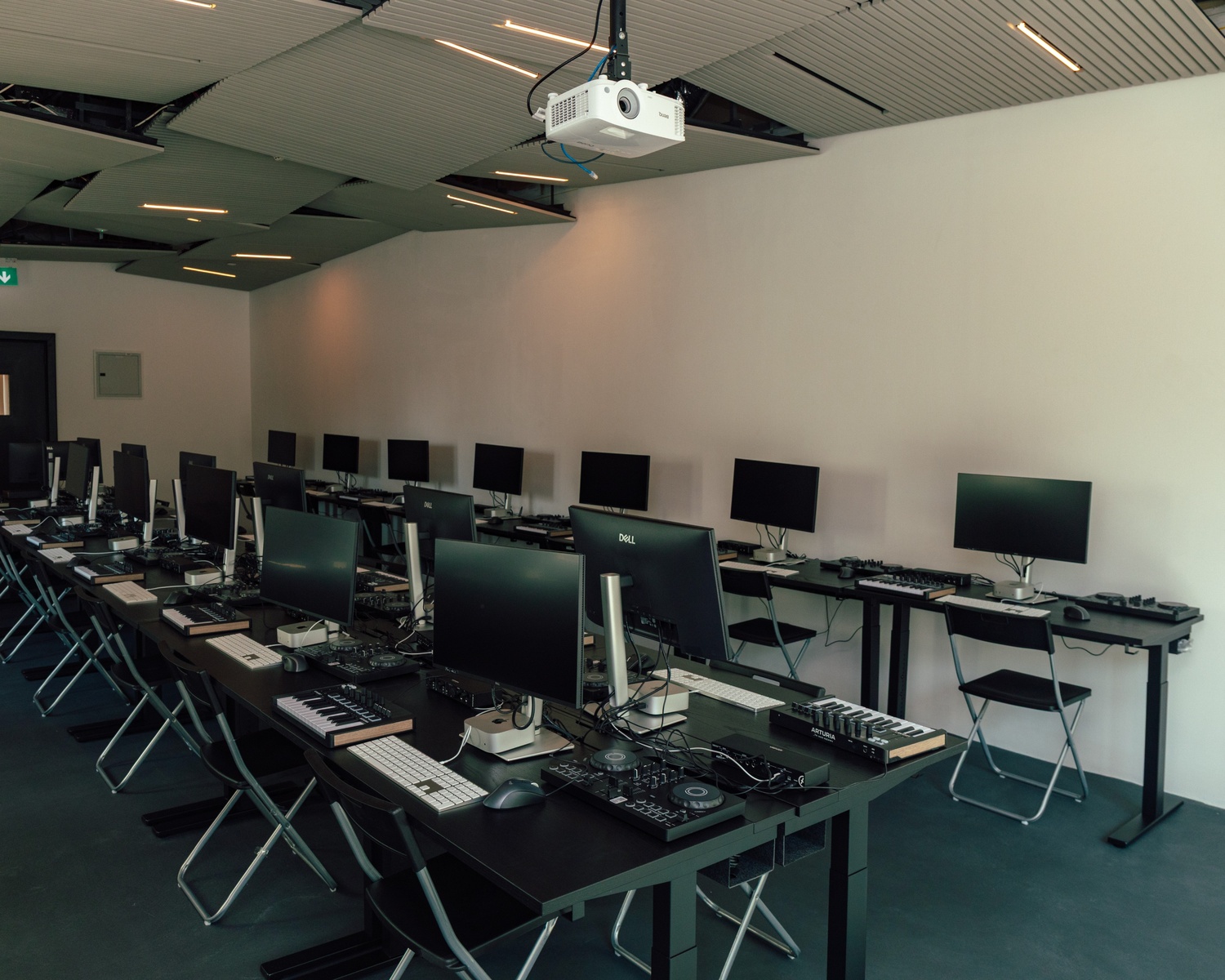
As the city’s music scene has matured, opportunities to study music production have expanded significantly. Educational institutions, private academies, and independent workshops now offer structured programs designed to help aspiring producers develop both technical and artistic skills.
Many courses focus on the fundamentals of digital audio workstations, teaching students how to build beats, arrange tracks, and mix audio effectively. Others dive deeper into specialized areas such as sound design, mastering, or live electronic performance.
Beyond formal education, community-driven learning has become a defining feature of Dubai’s production culture. Producers frequently exchange knowledge through collaborative sessions, informal meetups, and online groups where techniques, plugins, and project files are shared.
Workshops hosted by visiting artists have also become increasingly common. When international producers perform in Dubai, they sometimes extend their visit to host masterclasses where they break down their creative process and discuss the realities of the music industry.
For many emerging producers, these experiences can be transformative. Observing how experienced professionals structure their workflow or approach sound design often reveals insights that would take years to discover independently.
The sense of community built through these educational environments often extends beyond the classroom. Students frequently continue collaborating long after courses end, forming creative collectives that eventually evolve into labels, event brands, or production teams.
Navigating the Dubai Music Industry as an Emerging Producer
Entering the Dubai music industry requires more than technical skill. Producers must also develop an understanding of how the local ecosystem operates, from nightlife venues and promoters to media outlets and digital distribution channels.
Networking remains one of the most powerful tools for building a presence in the city. Attending events, introducing yourself to DJs, and participating in collaborative studio sessions can gradually establish your name within the community. Because Dubai’s music scene is relatively interconnected, genuine relationships often lead to unexpected opportunities.
Professionalism plays an equally important role. In a city driven by business culture, reliability and communication matter just as much as creative ability. Producers who deliver high-quality work on time and maintain clear professional relationships tend to build stronger reputations.
Social media has also become an essential platform for showcasing production work. Short studio clips, behind-the-scenes videos, and previews of unreleased tracks allow producers to demonstrate both their creative identity and their technical process.
Collaborations with vocalists, DJs, and visual artists can further amplify visibility. Dubai’s multicultural population means that creative partnerships often blend influences from multiple musical traditions, producing sounds that stand out on international streaming platforms.
Ultimately, success in Dubai’s music industry often comes from a combination of persistence, adaptability, and a willingness to engage with the community around you.
Turning Your Dubai Studio Sessions Into Global Releases
The most exciting aspect of producing music in Dubai today is the city’s direct connection to the global industry. Physical location is no longer a limitation. A track created in a small studio overlooking Sheikh Zayed Road can reach listeners in London, São Paulo, Tokyo, or Los Angeles within minutes of release.
For producers who approach their craft with both creativity and strategy, Dubai offers an unusual advantage: a multicultural environment that naturally encourages experimentation. Sounds that might feel niche in one country often resonate strongly in a city where dozens of musical traditions intersect daily.
Turning studio sessions into global releases ultimately requires a combination of artistic vision, technical discipline, and strategic distribution. Producers must think not only about the sound of their music but also about how it will be presented, promoted, and shared with audiences.
Dubai’s evolving creative ecosystem makes this process increasingly accessible. With modern production tools, a supportive creative community, and direct access to international platforms, producers based in the city now have the ability to build careers that extend far beyond the UAE.
In many ways, Dubai’s music production story is still being written. For those willing to invest the time to refine their sound, collaborate with others, and navigate the city’s dynamic industry landscape, the opportunities are only beginning to unfold.
Frequent Asked Questions
Dubai offers a unique advantage for emerging producers because the scene is still growing. While competition exists, the industry is not yet saturated, and producers who actively network and collaborate can build meaningful connections relatively quickly.
Not necessarily. Many successful producers work primarily from home studios. A well-configured computer, quality monitoring, and strong production skills can produce results that compete with tracks created in large commercial studios
Electronic music plays a significant role in the city’s nightlife culture, particularly house, techno, and Afro house. However, producers also work across pop, hip-hop, Arabic music, film scoring, and experimental electronic genres.
Yes. Dubai regularly hosts touring DJs, producers, and performers from around the world. Studio collaborations and songwriting sessions often emerge when international artists spend time in the city.
Absolutely. Digital distribution platforms allow producers in Dubai to release music worldwide. Many artists in the region operate internationally while living and producing locally.