Custom Ableton Racks vs AI Presets: Who Really Controls the Sound in 2026?
Music production in 2026 sits at a fascinating intersection of human craft and machine intelligence. Digital audio workstations now ship with AI-driven assistants capable of generating sounds, mixing chains, and even musical arrangements in seconds. At the same time, experienced producers continue to rely on deeply customized tools—especially complex Ableton racks that encode years of workflow experimentation and sonic exploration.
This shift has created an ongoing debate within modern production culture. When a sound emerges from a track today, who actually shaped it—the producer, or the algorithm? For some creators, AI presets accelerate creativity and remove technical barriers. For others, they risk flattening sonic identity and replacing intentional sound design with automated suggestions.
The reality unfolding across studios and bedrooms worldwide is more nuanced. Artificial intelligence is not simply replacing sound designers, nor are traditional techniques disappearing. Instead, producers are redefining how control, authorship, and creativity operate in an increasingly automated production environment.
Understanding that tension requires looking closely at how AI-assisted sound design emerged, how custom Ableton racks function under the hood, and how both approaches influence the creative decisions that shape modern music.
The Rise of AI-Assisted Sound Design in Modern DAWs
Only a decade ago, sound design was still widely viewed as a specialized skill. Producers who wanted unique textures often spent hours sculpting oscillators, filters, envelopes, and effects chains from scratch. Preset libraries existed, but they served mostly as starting points. The deeper artistry came from modifying and recombining those sounds until they reflected a personal style.
The landscape began shifting in the early 2020s as machine learning systems started appearing inside creative software. At first, these tools focused on relatively narrow tasks: automatic mastering, intelligent EQ suggestions, or chord progression generation. Their purpose was primarily supportive. They removed friction from technical processes that many musicians found intimidating.
By the middle of the decade, however, the capabilities of these systems expanded dramatically. AI models trained on enormous audio datasets could analyze genre patterns, harmonic movement, and timbral characteristics. This allowed them to generate entire instrument patches, effect chains, and even evolving textures based on simple prompts or reference tracks.
Modern DAWs now incorporate AI sound generation in ways that feel almost conversational. A producer can type a description like «dreamy ambient pad with analog warmth and subtle movement,» and the system constructs a multi-layered patch with modulation, filtering, and spatial processing already in place. Within seconds, a complex sound emerges that might once have taken significant technical effort to build.
This transformation has lowered the barrier to entry for countless aspiring musicians. Someone with minimal knowledge of synthesis can now access sophisticated sonic palettes that were previously the domain of experienced sound designers. In educational settings, this shift has also influenced how music production is taught. Rather than starting exclusively with signal flow theory, many learners begin by experimenting with AI-generated sounds and then reverse-engineering them to understand the underlying processes.
At the same time, the rise of AI-assisted sound design has sparked a deeper conversation about creative authorship. When an algorithm generates a sound based on statistical patterns drawn from thousands of existing tracks, the result can sometimes feel strangely familiar. It sits comfortably within the conventions of a genre but may lack the unpredictable quirks that emerge when a human pushes tools in unusual directions. This tension is especially visible in electronic music communities where sonic identity has long been tied to experimentation. Producers who built their reputations on distinctive textures often view AI presets with cautious curiosity. They appreciate the speed but remain skeptical about whether automated tools can truly replicate the subtle decisions that give a track its character. The rapid adoption of these technologies suggests that AI-assisted sound design is not a temporary trend. Instead, it represents a structural shift in how music production tools are evolving. The question is not whether producers will use AI, but how they will integrate it into their existing workflows. And that question becomes particularly interesting when placed alongside one of the most powerful traditional systems for sound customization: the Ableton rack.
Inside Custom Ableton Racks: Macro Mapping, Modular Chains, and Producer Workflow
For many electronic producers, the Ableton rack is more than a technical feature. It is a personal instrument, shaped gradually through experimentation and accumulated experience. Over time, racks become repositories of creative knowledge, encoding the subtle techniques that define a producer’s sonic identity.
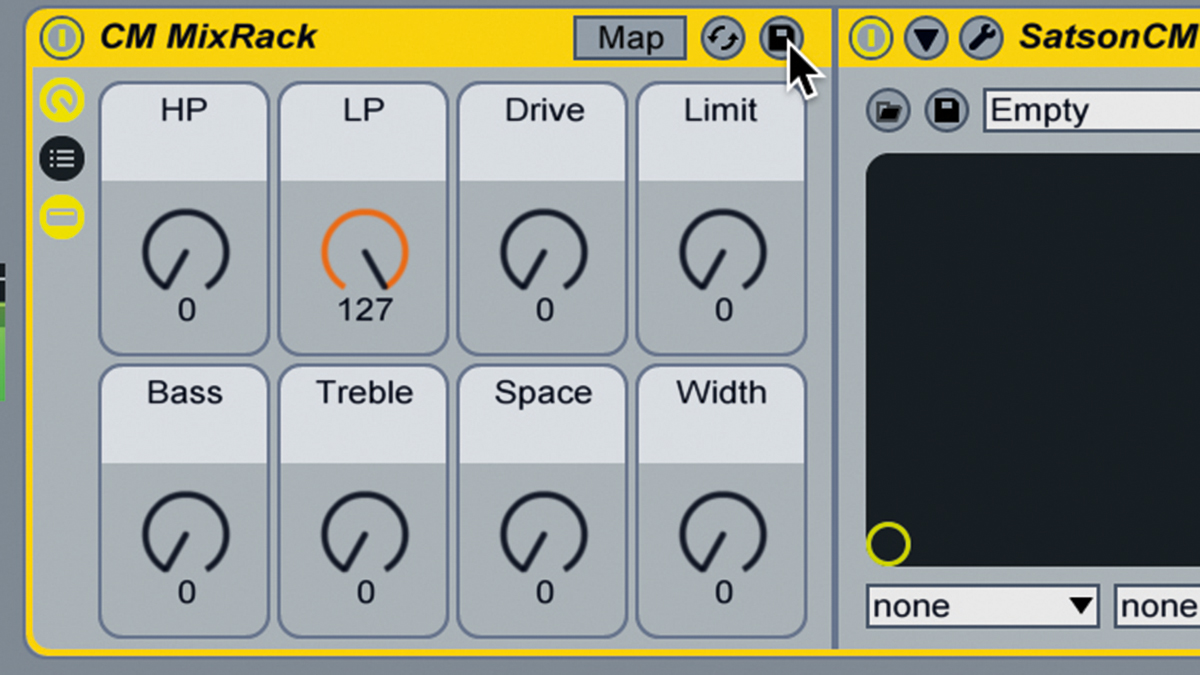
At its core, an Ableton rack allows multiple devices—synths, samplers, effects, and modulators—to be grouped into a modular signal chain. What makes the system particularly powerful is the ability to control dozens of parameters simultaneously through macro knobs. These macros act like performance controls, transforming complex processing networks into intuitive gestures.
A single macro might adjust filter resonance, delay feedback, distortion intensity, and stereo width all at once. Turning one knob can therefore reshape the entire emotional character of a sound. For producers who perform live or improvise while composing, this kind of tactile control becomes an essential part of the creative process.
Custom racks often evolve through incremental discovery. A producer might begin with a simple instrument and gradually add layers of processing—parallel compression, saturation chains, mid-side EQ, or dynamic modulation. Over time, these additions form intricate ecosystems of signal routing that would be difficult to reconstruct from memory. Because racks are modular, they also encourage experimentation in ways that traditional preset systems rarely allow. Producers can split signals into multiple parallel paths, apply different effects to each branch, and recombine them into complex textures. This architecture supports the kind of playful exploration that often leads to unexpected sonic discoveries. Another important aspect of custom racks is how they reflect individual workflow preferences. Some producers design racks that function like self-contained instruments, capable of generating entire rhythmic or harmonic patterns. Others build utility racks focused on mix processing or tonal shaping.
In both cases, the rack becomes an extension of the producer’s thinking process. Instead of navigating dozens of separate plugins, the musician interacts with a carefully designed interface that mirrors their creative priorities. This efficiency can dramatically accelerate the flow of ideas during a session.
Perhaps most importantly, custom racks introduce subtle imperfections that make sounds feel alive. When a human designs modulation patterns or parameter relationships, they rarely follow perfectly predictable curves. Slight asymmetries, nonlinear responses, and unconventional routing decisions create textures that feel distinctive and difficult to replicate.
This human unpredictability has long been one of the defining features of electronic music production. It reflects the tradition of artists pushing technology beyond its intended use, discovering new sonic territories through experimentation. In contrast, AI-generated presets often aim for optimized results. They are designed to sound immediately polished and genre-appropriate. While this can be extremely useful, it sometimes removes the messy, exploratory phase that has historically produced many iconic sounds. Understanding that difference helps explain why custom racks remain central to the workflow of many experienced producers—even in an era where AI can generate complex sounds almost instantly.
How AI Presets Generate Sounds, Mix Chains, and Musical Ideas Automatically
AI-generated presets operate very differently from traditional sound design systems. Instead of building sounds step by step through manual parameter adjustments, these systems rely on machine learning models trained to recognize patterns in large collections of audio data.
When a producer interacts with an AI preset generator, the software analyzes the request through a series of probabilistic models. These models estimate which combinations of synthesis parameters, effects, and modulation patterns are most likely to produce the desired sonic outcome. The result is assembled dynamically, often within milliseconds.
Behind the scenes, several layers of analysis are typically involved. First, the system interprets the descriptive input provided by the user. This might include textual prompts, reference tracks, or stylistic tags such as genre or mood. Natural language processing models translate these descriptions into a set of sonic characteristics.
Next, the engine constructs a signal chain that can reproduce those characteristics. This may involve selecting synthesis engines, configuring oscillators, applying filters, and arranging effect modules in specific sequences. In many cases, the system also introduces modulation sources to create movement and variation over time.
The final stage involves optimization. Machine learning algorithms evaluate the generated sound against the target description and make rapid adjustments to improve the match. Some systems even run simulated listening tests using trained neural networks that approximate human perception. The result is a preset that feels purpose-built for the user’s request. Instead of browsing through hundreds of patches, producers can generate a sound tailored to their needs almost instantly. AI preset systems are also increasingly capable of building entire mix chains. By analyzing the spectral content of a track, the software can suggest EQ curves, compression settings, and spatial processing strategies that align with industry mixing standards. For less experienced producers, this capability can dramatically accelerate the production process.
Another emerging feature is the generation of musical ideas alongside sound design. AI systems can propose chord progressions, basslines, and rhythmic patterns that complement the generated timbres. This integration of composition and sound design reflects a broader shift toward AI-assisted creativity across music production tools. Despite these impressive capabilities, AI-generated presets often reveal subtle limitations when examined closely. Because they rely on statistical patterns derived from existing music, they tend to gravitate toward familiar sonic territories. The results may sound polished but sometimes lack the eccentric details that emerge from unconventional experimentation.
Producers who rely exclusively on AI presets may therefore find that their tracks share a certain sonic similarity with others using the same tools. This phenomenon has already begun shaping conversations within electronic music communities about originality and creative ownership. Yet it would be misleading to frame AI presets as inherently restrictive. When used thoughtfully, they can function as powerful starting points. Many producers treat them the way earlier generations approached preset libraries: raw material to be reshaped and personalized through additional processing. In that sense, AI presets represent a new kind of collaborative partner in the studio. They provide rapid inspiration and technical support, while leaving space for human creativity to refine and transform the results.
Creative Control vs Algorithmic Convenience in 2026 Music Production
By 2026, the central tension in music production is no longer about whether AI tools should exist. That debate has largely faded. Instead, producers are negotiating how much control they want to maintain over the creative process. On one side of the spectrum lies the appeal of algorithmic convenience. AI systems can now generate usable sounds, mix decisions, and compositional ideas faster than any human workflow. For producers working under tight deadlines—film composers, content creators, and commercial music writers—this efficiency can be transformative. A track that might once have taken hours to sculpt can now reach a polished state in minutes. AI-assisted mixing tools balance frequencies automatically, spatial processors create convincing depth, and preset generators deliver genre-specific timbres almost instantly. For many musicians, this acceleration removes barriers that previously slowed the creative process. Instead of wrestling with technical complexities, they can focus more directly on musical expression.
Yet convenience inevitably raises questions about authorship. When a significant portion of a track’s sound emerges from automated systems, the producer’s role begins to shift. Rather than designing every element manually, they become curators and editors of algorithmically generated material.
Some artists embrace this shift enthusiastically. They see AI as an extension of the studio, similar to how earlier technologies like samplers and synthesizers expanded musical possibilities. From this perspective, creative control lies not in programming every parameter but in guiding the overall aesthetic direction.
Other producers remain more cautious. They worry that heavy reliance on AI tools could erode the deep technical understanding that historically defined skilled sound designers. If algorithms handle the details automatically, will future musicians lose the ability to craft sounds from the ground up?
This concern is particularly relevant in genres where sonic experimentation plays a central role. Experimental electronic music, underground club scenes, and avant-garde production cultures often thrive on unconventional approaches that fall outside established patterns. AI models trained on mainstream datasets may struggle to generate those kinds of radical textures. Ultimately, the balance between control and convenience varies widely among producers. Some adopt AI tools as occasional assistants while preserving traditional sound design techniques. Others integrate automation deeply into their workflow, treating it as an essential creative collaborator. What remains clear is that the tools themselves do not determine artistic outcomes. The producer’s mindset—how they engage with those tools—continues to shape the music that emerges.
Speed, Originality, and the Producer’s Signature Sound
Speed has always played a complicated role in music production. On one hand, faster workflows can capture fleeting creative ideas before they fade. On the other, rapid processes sometimes bypass the exploratory stages where truly distinctive sounds emerge.
AI presets dramatically increase production speed. A sound that might once have required careful layering and modulation can now appear fully formed with a single prompt. For producers juggling multiple projects, this efficiency can be invaluable.
Yet originality often thrives in slower, more experimental environments. Many iconic sounds in electronic music history emerged from accidents, misconfigurations, or unconventional signal routing. These moments of discovery rarely follow optimized paths. Custom Ableton racks encourage this kind of exploration. Because they are built gradually and often modified in unpredictable ways, they accumulate quirks that shape a producer’s sonic identity. Two artists might start with similar tools, yet their racks evolve differently over time, reflecting unique habits and preferences. This individuality is central to what listeners recognize as a signature sound. It is not simply a matter of genre or instrumentation but a subtle combination of tonal choices, spatial textures, and dynamic movement. When producers rely heavily on AI presets, maintaining that individuality requires additional effort. The initial sounds may be impressive, but they often share underlying design principles with countless other generated patches. Without further modification, tracks risk blending into a broader aesthetic landscape. Many experienced producers therefore treat AI-generated sounds as raw material rather than finished products. They reshape them through custom processing chains, unusual modulation sources, or manual resampling techniques. In doing so, they reintroduce the human unpredictability that gives music its character.
This hybrid approach highlights an important truth about modern production. Speed and originality are not mutually exclusive, but achieving both requires intentional creative decisions.
Hybrid Workflows: Combining Human Sound Design with AI Assistance
The most interesting developments in contemporary music production are emerging not from pure automation or pure manual design, but from hybrid workflows that combine both approaches.
In these environments, AI functions as a rapid ideation engine. Producers generate sounds, textures, or musical fragments quickly, then reshape them using traditional sound design techniques. The process resembles collaboration between two creative partners with different strengths.
A typical session might begin with an AI-generated pad or rhythmic pattern. Instead of using it unchanged, the producer dissects the sound inside a custom rack, routing it through additional processing layers. Filters are automated manually, distortion stages are introduced in parallel chains, and modulation sources create subtle variations over time.
This process transforms the original preset into something more personal. The algorithm provides the initial structure, but the producer guides its evolution. Hybrid workflows also encourage new forms of experimentation. AI systems can generate unusual combinations of synthesis parameters that a human might not immediately consider. When these unexpected sounds enter a modular rack environment, they become starting points for deeper exploration.
Education within modern music production communities increasingly reflects this blended approach. Rather than teaching AI tools and traditional sound design as separate skills, many instructors emphasize how they interact. Students learn to analyze AI-generated patches, understand their architecture, and modify them creatively.
This perspective frames AI not as a replacement for technical knowledge but as a catalyst for curiosity. By revealing new sonic possibilities quickly, it encourages producers to investigate how those sounds are constructed. As these hybrid methods evolve, the distinction between AI-generated and human-designed sound becomes less rigid. What matters most is the final musical outcome and the creative journey that produced it.
The Future Producer: Designing Sound in an AI-Augmented Studio
The studio of the future will not belong exclusively to humans or machines. Instead, it will function as a collaborative environment where creative intuition and computational intelligence interact continuously.
Producers entering the field today are learning to navigate this hybrid landscape from the start. They experiment with AI-generated ideas, dissect them to understand their structure, and rebuild them inside custom workflows that reflect personal aesthetics. The process resembles dialogue rather than automation.
In this context, creative control is no longer defined solely by manual parameter adjustments. It emerges from a broader set of decisions: choosing when to rely on algorithms, when to intervene, and how to reshape automated outputs into something meaningful.
Custom Ableton racks will likely remain central to this ecosystem because they embody the human side of production. They capture the subtle decisions, habits, and sonic preferences that accumulate over years of experimentation. AI presets, meanwhile, will continue evolving as powerful engines of inspiration. Their ability to generate complex textures instantly will expand the palette available to musicians across all skill levels. The most compelling music of the coming decade will likely emerge from producers who treat these tools not as competitors but as complementary forces. By blending the speed of algorithms with the curiosity of human experimentation, they will shape sounds that feel both technologically advanced and deeply personal.
In that studio, the question of who controls the sound becomes less important than how creativity flows between human imagination and intelligent machines.
Frequently Asked Questions
AI presets are not replacing sound design but transforming how it begins. Many producers now start with AI-generated sounds and then customize them extensively. Traditional synthesis knowledge remains valuable because it allows musicians to modify and refine automated results.
Custom racks remain one of the most powerful tools for shaping a personal workflow and sonic identity. They allow producers to control multiple parameters simultaneously, build complex signal chains, and create instruments tailored to their creative style.
AI systems generate sounds based on patterns learned from existing music. While the combinations may be new, they often reflect familiar stylistic tendencies. Producers typically achieve greater originality by modifying these sounds through additional processing and experimentation.
In many cases, yes. AI presets can generate complex sounds and mix chains within seconds. However, producers who prioritize distinctive sonic character often spend additional time reshaping those sounds to match their artistic vision.
Understanding synthesis, signal flow, and audio processing remains crucial. These skills allow producers to manipulate AI-generated material creatively rather than relying on it unchanged.